
AI-fication and the Changing Role of Salesforce Developers
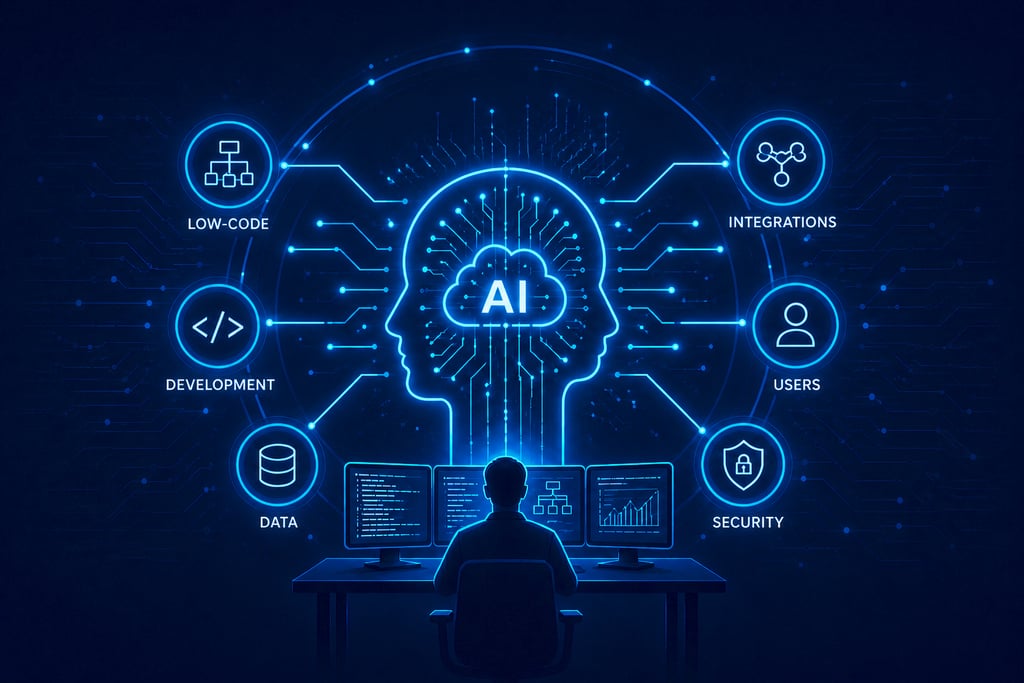
Salesforce development has already moved from a code-centric approach to one where configuration plays a major role. Now, a new shift is emerging: AI-fication. It is not just about adding intelligence, but about changing how solutions are designed and understood. As execution becomes easier through automation and AI, the real challenge shifts toward making the right decisions and managing increasingly fragmented systems. The role of the developer is not disappearing, but evolving beyond writing code toward shaping how complex systems work together.
ARTICLES
If you have been working with Salesforce for some time, you have probably noticed that something is shifting. It is not just about new tools or new releases. It feels more subtle than that. The way solutions are built is changing, and with it, the role of the developer. There was a time when things were more straightforward. You wrote Apex, designed triggers, built components, and the value was clear. You could point at what you had built and understand exactly where your contribution was. That clarity is starting to fade.
From building to shaping
Today, many solutions no longer start with code. Flow, low-code tools, and now AI make it possible to build quite complex processes without writing anything. In some projects, development is not even the starting point anymore. At first glance, it looks like things are becoming simpler, but the reality is a bit different. The complexity has not disappeared, it has just moved. You end up with logic spread across different places, pieces that work on their own but do not always fit well together, and when something breaks it is not obvious where the problem comes from. This is where the developer comes back in, but in a different role. Less focused on building from scratch, more on understanding what is already there and trying to bring some order into it.
The illusion of simplicity
Low-code and AI give a strong sense of simplicity. You can create things faster, automate processes quickly, and deliver visible results in less time, and that part is real. But when these solutions grow, they tend to become harder to reason about. Logic gets fragmented, dependencies are not always clear, and small changes can have unexpected effects. The system still works, but it becomes less transparent, and that is where the real difficulty starts. What looked simple at the beginning slowly turns into something that requires a deeper understanding to maintain.
AI as a layer, not a replacement
With AI, there is a lot of discussion about replacing development work, but in practice it does not feel like a replacement. It helps with execution, it can generate code, suggest approaches, and speed up repetitive tasks, but it does not understand the context in the way a developer does. It does not decide what should be built or why. If anything, it shifts the focus. When execution becomes easier, the importance of making the right decisions increases, and that is something that cannot be delegated so easily.
The growing weight of integrations
At the same time, Salesforce is rarely isolated anymore. Most of the interesting problems are not inside the platform itself, they are between systems. APIs, external services, data synchronization, all of that becomes part of the day-to-day work. This is where things tend to get complicated. Authentication, consistency, error handling, these are not problems that disappear with configuration or automation. They require a different kind of understanding, one that goes beyond the platform itself and forces you to think in terms of systems rather than features.
A different entry point
All of this also changes how developers start. The small tasks that used to help you learn step by step are less common now. Many of them are automated or abstracted away, so the path becomes less gradual and sometimes you are expected to understand things before having enough experience with them. It is still possible to learn, but it feels different, and in some cases more demanding from the beginning.
What remains
Despite all these changes, one thing does not really go away. The need for someone who understands how everything fits together. Not just how to build something, but when it makes sense to build it. Not just how to automate, but when it is better not to.
Closing thought
AI does not remove the developer. It changes where the value sits. Less in writing code, more in understanding systems that are becoming increasingly difficult to see as a whole. And maybe that is the real shift that is happening.
Content
Related Stories
mpdigitals.com © 2026 | Salesforce insights and digital transformation